The Best Durable Toys for German Shepherds: Chew, Fetch, and Working-Drive Picks
- Our Top Picks at a Glance
- Quick Comparison
- How We Judge Toys for German Shepherds
- Best Everyday Chew: KONG Extreme
- Toughest Dedicated Chew: Goughnuts Ring
- Best Fetch Ball: Chuckit! Ultra Ball
- Best Body-Slam Outlet: The Jolly Ball
- Best Tug: A Real Bite Tug
- Best Mental Workout: West Paw Qwizl or KONG Wobbler
- Sizing, Supervision, and When to Retire a Toy
Our Top Picks at a Glance
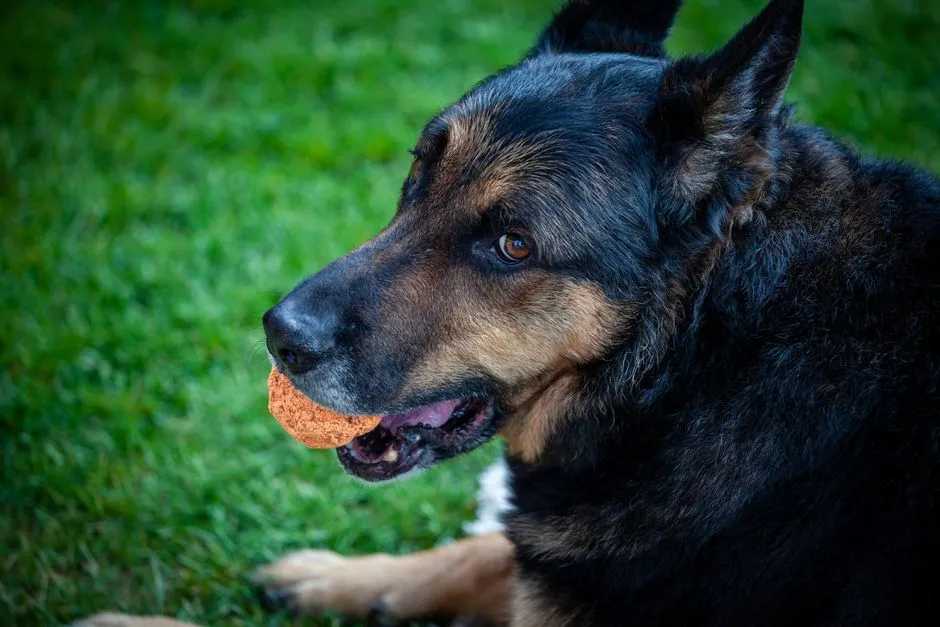
German Shepherds are a specific kind of hard on toys. They combine serious jaw strength with working-dog intelligence and a herding breed's stamina, which means they don't just chew toys — they dissect them, and then they look at you like it's your fault the toy is dead. The right toy lineup for a GSD isn't one heroic chew. It's a small rotation that covers three jobs: chewing, high-drive fetch and tug, and mental work.
Here's where we land after applying our standard criteria — material density, build quality, safety design, and realistic lifespan — to the German Shepherd's particular mix of bite force and brainpower:
- Best everyday chew: KONG Extreme (black rubber, size XL for most adult GSDs)
- Toughest dedicated chew: Goughnuts Ring in the .75 or Black formulation
- Best fetch ball: Chuckit! Ultra Ball, sized Large or XL — for retrieving, not unsupervised chewing
- Best body-slam outlet: Jolly Pets Push-n-Play or Tug-n-Toss (a Jolly Ball, 10-inch or larger)
- Best tug: A stitched fire-hose or French linen bite tug with a real handle
- Best mental workout: West Paw Qwizl or a KONG Wobbler for meal-time puzzling
One thing before the details, because it matters more for this breed than most: no toy on this list is indestructible for a determined German Shepherd. Some GSDs will retire a Goughnuts eventually. The honest goal is toys that fail slowly, predictably, and in ways you can catch during inspection — not toys that never fail.
Quick Comparison
| Pick | Job | Material | Best size for adult GSDs | Supervision level |
|---|---|---|---|---|
| KONG Extreme | Everyday chew, stuffable | Ultra-dense natural rubber | XL | Moderate — inspect weekly |
| Goughnuts Ring | Dedicated power chewing | Very dense rubber, safety indicator core | .75 / Black, large diameter | Moderate — replace if red core shows |
| Chuckit! Ultra Ball | Fetch only | High-bounce rubber | Large or XL | High — put away after fetch |
| Jolly Ball | Chase, push, body-slam | Thick flexible plastic | 10"+ | Moderate |
| Fire-hose/linen bite tug | Tug and drive work | Layered hose or linen, stitched | 2–3" wide, long handle | Interactive only |
| West Paw Qwizl / KONG Wobbler | Puzzle feeding | Zogoflex rubber / hard plastic | Large | Moderate |
How We Judge Toys for German Shepherds
Breed guides on this site start with the dog, not the toy. Three GSD traits drive every pick here:
- Bite force plus molar grinding. Shepherds tend to work a chew back to the molars and grind steadily, which shreds hollow or thin-walled toys fast. We prioritize dense, thick-walled rubber.
- Working drive. A GSD without a job invents one, and the job is usually demolition. Fetch, tug, and puzzle toys aren't extras for this breed — they're the pressure-release valve. If destructive chewing is your main complaint, the fix is often more outlet, not a tougher chew; our guide to puzzle toys heavy chewers can't brute-force apart goes deeper on that.
- Size. An adult male GSD can run 65–90 pounds with a long muzzle. Toys sized for "large dogs" are sometimes still too small. When in doubt, size up — a toy that can slip past the back teeth whole is a choking hazard, full stop.
On top of that we apply our usual durability lens: how dense is the material, where are the seams and stress points, and — critically — how does it fail? A toy that cracks into a few large, obvious pieces is manageable. A toy that sheds small fragments is a vet visit waiting to happen.
Best Everyday Chew: KONG Extreme
The black KONG Extreme is the default recommendation for a reason. The ultra-dense natural rubber resists puncture and tearing far better than the classic red version, the snowman shape has no seams or weak joints, and the hollow core turns it into a stuffable enrichment toy — freeze it with soaked kibble and you've bought a solid stretch of quiet.
Why it wins for GSDs: it covers two jobs at once. It's tough enough for steady molar grinding, and the stuffability taps the breed's problem-solving drive. For most adult German Shepherds, the XL is the right call; a large male may even do better with the XXL. If the whole toy fits behind the canines with room to spare, it's too small.
Worth knowing: determined shepherds do eventually get purchase on the wide bottom rim and start peeling. Once you see rubber flaps or cracks, retire it. Also, the erratic bounce that makes it fun on grass makes it a furniture-seeking missile indoors.
Toughest Dedicated Chew: Goughnuts Ring
Goughnuts builds rubber rings and sticks specifically for power chewers, and their design has one genuinely smart safety feature: a colored indicator core. Chew through the outer black or green rubber to expose the red center, and that's your unambiguous signal to take the toy away. Goughnuts has long backed that indicator with a replacement policy — check the current terms when you buy.
Why it wins for GSDs: density. This is among the densest chewable rubber sold as a toy, and the ring shape lets a shepherd brace it between paws and grind — their preferred chewing posture. For serious chewers, look at the larger-diameter rings in the harder formulations.
Worth knowing: it's a chew, not a play toy — heavy, low-bounce, and boring for fetch. It's also at the hard end of what we recommend. Apply the fingernail rule vets cite: if you can't dent the surface with a thumbnail, it's hard enough to risk a fractured tooth in a dog that chews recklessly. Know your dog before choosing the hardest version, and if your GSD is a slab-fracture risk, step down to softer rubber.
Best Fetch Ball: Chuckit! Ultra Ball
Fetch is cardio for the body; for a GSD it's also cardio for the brain when you mix in obedience between throws. The Chuckit! Ultra Ball is the standard here: thick-walled bouncy rubber, high visibility, floats, and shrugs off the clamping a shepherd applies on the return trip far better than any tennis ball.
Why it wins for GSDs: the Large fits standard launchers while being big enough for most shepherd mouths, and the rubber survives repeated compression that splits tennis balls and shears their abrasive fuzz — which, as a bonus, is also kinder to tooth enamel.
Worth knowing: this is a fetch ball, not a chew. Left alone with it, plenty of GSDs will eventually split it into two neat hemispheres. It goes in the drawer when the game ends. And skip standard tennis balls entirely for this breed — the felt is abrasive to teeth and the ball is compressible enough to be a throat risk for a large dog.
Best Body-Slam Outlet: The Jolly Ball
Some shepherd play isn't chewing or fetching — it's herding-style chasing, shoving, and pouncing. The Jolly Ball line (Push-n-Play, Tug-n-Toss) exists for exactly this. These are thick, flexible plastic balls, 10 inches and up, designed to be pushed, carried by the handle, and body-checked around a yard. Famously, they keep working even after they're punctured, because they don't rely on air pressure.
Why it wins for GSDs: it's too big to get a killing grip on, which is the whole point. The dog herds it instead of dissecting it, and that scratches a breed-specific itch nothing else on this list touches.
Worth knowing: the handle on the Tug-n-Toss version is the sacrificial part — most dogs chew it off eventually, and the ball carries on fine without it. Surface gouges are normal; retire it only if pieces start coming free.
Best Tug: A Real Bite Tug
Tug is one of the best drive outlets a GSD owner has, which is why working-dog trainers use it as a primary reward. Skip the flimsy rope toys and get what the sport-dog world uses: a bite tug of layered fire hose or French linen, roughly two to three inches wide, with stitched seams and a proper handle that keeps your hand clear of teeth.
Why it wins for GSDs: these are built for exactly this breed's grip-and-thrash style. The materials resist tearing at the bite surface, and the handle geometry protects your fingers. The tug lives in a drawer between sessions, which keeps its value as a reward sky-high.
Worth knowing: a tug is interactive equipment, not a solo toy — left with the dog, even hose material gets shredded, and swallowed strands are a real hazard. Rope toys deserve the same caution: loose strings are a linear foreign-body risk, so trim or toss frayed rope. While you're outfitting the tug drawer, the same heavy-webbing logic applies to walking equipment — see our roundup of heavy-duty leashes for strong pullers.
Best Mental Workout: West Paw Qwizl or KONG Wobbler
A tired German Shepherd body attached to a bored German Shepherd brain still destroys your baseboards. Puzzle feeders fix the brain half. Two picks survive shepherd handling: the West Paw Qwizl, a durable Zogoflex rubber puzzle that holds treats or a bully stick and makes the dog work for it, and the KONG Wobbler, a weighted, wobbling dispenser that turns a meal into ten minutes of effort. West Paw's Zogoflex line is also backed by the company's long-standing damage-replacement guarantee — again, verify current terms at purchase.
Why they win for GSDs: both are tough enough that brute force isn't a shortcut, which matters for a breed that solves puzzles with power when finesse stalls. Feeding at least one daily meal through a puzzle is one of the cheapest behavior improvements available to a shepherd owner.
Worth knowing: the Wobbler's hard plastic isn't a chew surface — it dispenses, the dog eats, it goes away. The Qwizl is chewable-grade rubber but softer than a Goughnuts, so inspect it more often. Neither replaces training or exercise; they supplement it.
Sizing, Supervision, and When to Retire a Toy
Three habits keep this whole lineup safe:
- Size up. For an adult GSD, default to L/XL in every category. A toy must be too large to pass behind the back molars whole.
- Inspect weekly, retire ruthlessly. Cracks, deep gouges, flaps of rubber, exposed indicator cores, loose strands — any of these means the toy is done. A half-destroyed tough toy is more dangerous than a cheap toy you threw out on time.
- Match hardness to your chewer. The thumbnail-dent test is your guardrail against fractured teeth. Not every shepherd needs the hardest option; most need the right outlet more than the toughest rubber.
If your shepherd is dispatching even the picks above at an alarming rate, the problem is usually rotation and outlet, not the toy. Our full roundup of the best indestructible-style dog toys covers the wider field by material and build, and the breed-agnostic durability picture there pairs well with this guide.
The short version: a KONG Extreme and a Goughnuts for the jaws, an Ultra Ball and a Jolly Ball for the legs, a bite tug for the drive, and a puzzle feeder for the brain. Rotate them, inspect them, and replace them without sentiment. That's the whole system — and it's cheaper than replacing another couch cushion.