The Best Fetch Balls for Power Chewers (That Survive Being Clamped)
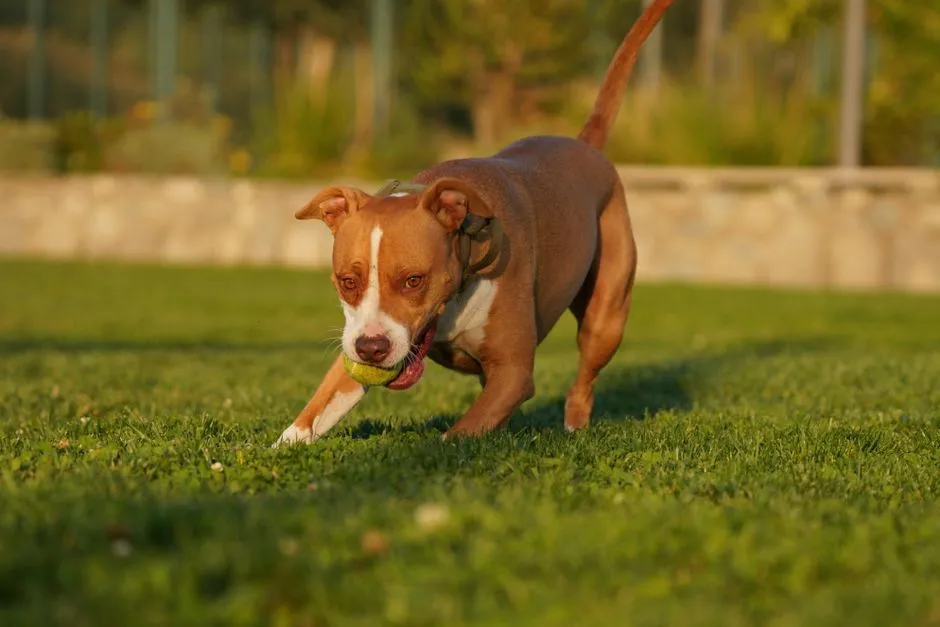
The Short Answer: Our Top Fetch Balls for Power Chewers
Fetch balls die differently than chew toys. A chew toy fails under sustained gnawing; a fetch ball fails in the pauses — the thirty seconds between retrieves when a high-drive dog clamps down, compresses the ball flat, and works the seam. So a great fetch ball for a power chewer needs two things at once: enough bounce and grip to be worth chasing, and enough material density to survive being treated like a chew toy every time the game stops.
Here's where we land after applying our standard criteria — material density, seam construction, puncture behavior, and mouth safety:
- Best all-around: West Paw Jive — durable Zogoflex material, erratic bounce, floats, dishwasher-safe
- Best for launcher fetch: Chuckit! Ultra Ball — the benchmark for grip, bounce, and visibility
- Toughest rubber: Kong Extreme Ball — the classic black-rubber answer for dogs who compress everything
- For the truly relentless: Goughnuts Ball — dense, heavy rubber for dogs who defeat everything above
- Simplest solid option: Ruff Dawg rubber balls — one solid piece of rubber, nothing to unpeel
- For puncture artists: Jolly Pets Bounce-n-Play — designed to keep its shape even after it's been punctured
One thing up front, because it applies to every pick on this list: no ball is indestructible for every dog. A determined 70-pound clamper can eventually damage anything on this page. The goal is a ball that fails slowly, visibly, and in chunks too large to swallow — and an owner who supervises, sizes correctly, and retires the ball when it's damaged.
How We Judge a Fetch Ball
We evaluate every fetch ball against the same criteria. Knowing them will help you assess any ball, including ones we haven't covered.
Material density and compression recovery
Power chewers compress a ball between retrieves. A good ball deforms and springs back thousands of times; a bad one develops a permanent crease, and a crease becomes a split. Solid or thick-walled rubber and dense TPU-style materials handle repeated compression far better than thin-walled vinyl or air-filled balls.
Seam and mold-line construction
Almost every ball that dies young dies at the seam. Dogs find the mold line with their molars and work it like a zipper. Balls molded as a single piece, or with well-fused seams, last dramatically longer than two-halves-glued construction.
Puncture behavior
Every ball eventually gets punctured. The question is what happens next. The best outcomes: the ball stays round and playable (solid rubber), or deflates without shattering into swallowable pieces. The worst: a thin shell that cracks into sharp fragments.
Mouth safety
Two checks here. First, hardness — a fetch ball shouldn't be tooth-crackingly hard. The rule of thumb many veterinarians cite: if you can't dent the surface with a fingernail, it's hard enough to risk a slab fracture in a dog who chomps down at speed. Fetch balls get caught mid-air by dogs at full sprint, so this matters more here than for stationary chews. Second, felt abrasion — standard tennis-ball felt picks up grit and acts like fine sandpaper on tooth enamel over hundreds of retrieves. Heavy fetch dogs are better served by rubber-surfaced balls.
Size
A too-small ball is the single most dangerous item in the toy bin. A ball that can slip past the back molars can lodge in the airway. We cover the details in our dog toy sizing guide, but the short version: the ball should always be clearly larger than your dog's gape. When in doubt, size up.
The Picks
West Paw Jive — Best All-Around
Why it wins: The Jive is molded from West Paw's Zogoflex material — a dense, flexible thermoplastic that recovers from compression instead of creasing, and dents under a fingernail, which is exactly what you want in a ball that gets caught out of the air. It's a single molded piece with no glued seam to unzip, it floats, it survives the dishwasher, and its slightly off-round shape gives it an erratic bounce that keeps high-drive dogs engaged. West Paw also stands behind its Zogoflex toys with a guarantee against dog damage — check current terms with the manufacturer, but the policy itself tells you how the material performs.
Worth knowing: The flexible material that makes it tooth-safe also means a dedicated chewer left alone with it can eventually gnaw pieces off the surface. This is a fetch ball, not a solo chew toy — bring it out for the game, put it away after.
Chuckit! Ultra Ball — Best for Launcher Fetch
Why it's here: For pure fetch mechanics, the Ultra Ball is the benchmark: a natural-rubber ball with a grippy textured surface, strong bounce, high-visibility coloring, and compatibility with Chuckit! launchers, which spare your shoulder on long sessions. It floats, and the rubber is far kinder to enamel than felt-covered tennis balls. For dogs who genuinely fetch — chase, retrieve, release, repeat — it's hard to beat.
Worth knowing: The Ultra Ball is durable for a fetch ball, not for a chewer. Its walls are rubber but not solid, and a dog who settles in to chew between throws can breach it faster than anything else on this list. If your dog carries the ball off to a corner and starts working on it, move up-list.
Kong Extreme Ball — Toughest Conventional Rubber
Why it's here: Kong's black Extreme rubber compound is the same ultra-durable formulation the brand uses for its toughest chew line, shaped into a ball. It has real heft, a predictable bounce, and the kind of dense-but-yielding rubber that shrugs off compression clamping better than nearly any standard fetch ball. For dogs who treat every pause in the game as a chewing opportunity, this is the sensible default.
Worth knowing: It's heavier and less lively than a Chuckit!, it doesn't float reliably, and versions with a center hole need a quick check: a through-hole is a safety feature (it prevents suction), but inspect the rim area regularly, because that's where determined chewers start.
Goughnuts Ball — For Dogs Who Defeat Everything Else
Why it's here: Goughnuts builds engineering-first rubber toys for the far end of the power-chewer spectrum, and its ball is characteristically dense, heavy, and nearly seamless. If your dog has personally destroyed the three picks above, this is the tier you shop in. The company is known for standing behind its products for aggressive chewers — again, verify current guarantee terms directly.
Worth knowing: All that density comes at a cost to the fetch part of fetch: it's heavy, the bounce is muted, and it typically sinks. It also sits at the firm end of acceptable hardness — do the fingernail check on the exact ball you buy, and skip it for dogs with any dental history. This is a ball for controlled ground-fetch with a supervising owner, not dock diving.
Ruff Dawg Rubber Balls — Simplest Solid Option
Why it's here: Sometimes the answer is the simplest object: one solid piece of rubber, molded in the USA, with no seam, no shell, no core, and nothing to unpeel. Puncture behavior is the best case scenario — there's nothing to puncture into, so tooth marks stay tooth marks. Solid rubber balls like Ruff Dawg's are a strong value pick for clampers.
Worth knowing: Solid rubber is dense; check hardness on arrival with the fingernail test, and note that bounce and buoyancy vary by size and formulation — don't assume it floats until you've tested it in shallow water.
Jolly Pets Bounce-n-Play — For Puncture Artists
Why it's here: Some dogs — often the big herding and guardian types — don't chew balls so much as spear them. For them, Jolly Pets built its reputation on a simple idea: a ball with no air bladder, so a puncture doesn't matter. The Bounce-n-Play keeps its shape and stays playable after it's been holed, comes in genuinely large sizes appropriate for big dogs, and floats.
Worth knowing: These are push-and-chase balls more than retrieve balls — most dogs can't get a mouth around the larger sizes, which is partly the point. And "keeps playing when punctured" is not "chew-proof": once your dog opens a hole big enough to grip and tear, retire it.
Comparison at a Glance
| Ball | Material | Floats | Launcher-compatible | Best for |
|---|---|---|---|---|
| West Paw Jive | Zogoflex (dense TPU-style) | Yes | Size-dependent | All-around fetch + clamping between retrieves |
| Chuckit! Ultra Ball | Natural rubber, textured | Yes | Yes (Chuckit!) | High-volume launcher fetch |
| Kong Extreme Ball | Kong Extreme rubber | Not reliably | No | Compression clampers |
| Goughnuts Ball | Dense engineered rubber | Typically sinks | No | Extreme chewers, ground fetch |
| Ruff Dawg rubber balls | Solid rubber | Varies by model | Varies by size | Simplicity, puncture resistance |
| Jolly Pets Bounce-n-Play | No-air-bladder plastic | Yes | No | Big dogs who puncture everything |
On price: durable fetch balls are one of the cheaper categories we cover. Most solid options typically run somewhere in the $10–$30 range depending on size and material, with the extreme-duty rubber at the upper end — prices vary by size and retailer.
The Rules That Keep Any Fetch Ball Safe
The best ball on this list is only as safe as the way you use it. Four habits:
- Size up, always. The ball must be too big to pass the back teeth. If your dog can close their mouth around it fully, it's a hazard, not a toy. Our dog toy sizing guide walks through how to measure.
- Fetch balls are session toys. Bring the ball out for the game, put it away after. Unsupervised alone-time is when balls become chew toys, and most of these aren't built for that job.
- Inspect and retire. Check for cracks, deep gouges, and loose flaps every few sessions. A damaged ball sheds pieces, and pieces get swallowed. When in doubt, throw it out — our full roundup of the toughest chew toys covers what actually holds up to solo chewing.
- Do the fingernail check. If you can't dent the surface with a thumbnail, the ball is hard enough to risk a fractured tooth in a dog who catches at speed. This matters most for airborne catches.
And skip the bargain-bin tennis balls for daily fetch. The felt abrades enamel over time, the pressurized core makes them trivially easy to crack open, and the shredded remains are exactly the size dogs swallow.
If Fetch Isn't the Whole Game
Plenty of power chewers want to catch the ball and then fight you for it. If your dog's favorite part of fetch is the part where they don't give it back, a proper tug toy handles that job far more safely than wrenching a ball out of clamped jaws — our guide to tug toys for strong dogs covers handles, materials, and stress points. And for the rest of the toy bin, the Fetch & Tug collection is where we keep everything built for dogs who play at full contact.