How to Play Tug-of-War Safely: Rules That Protect Teeth, Necks, and Manners
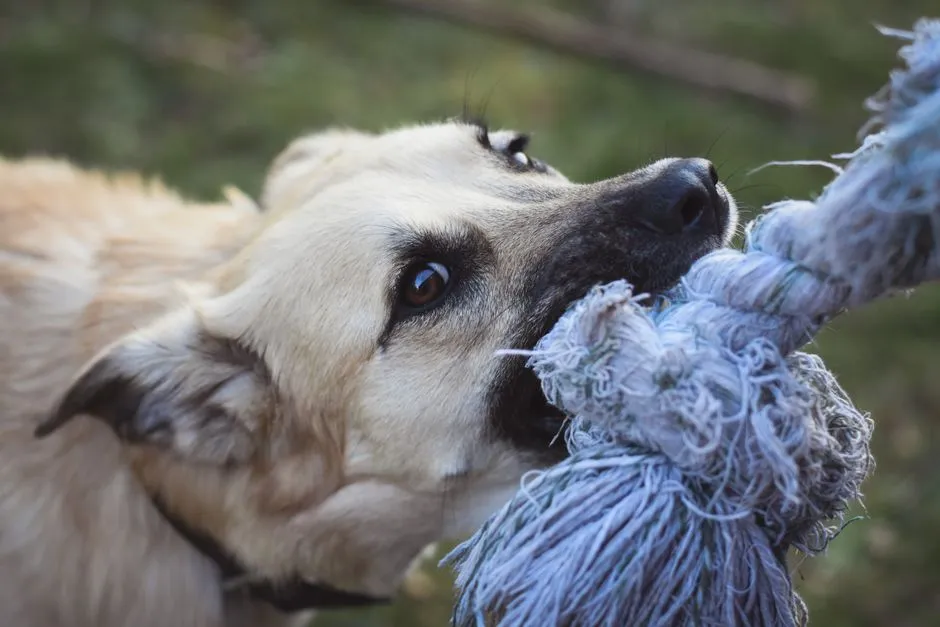
Is Tug-of-War Bad for Dogs? The Short Answer
No — played with a few non-negotiable rules, tug-of-war is one of the best games you can play with a dog. It burns physical and mental energy in a small space, builds engagement with you, and gives high-drive dogs a legal outlet for the grabbing and pulling they were going to do anyway. Modern trainers use tug constantly as a reward in obedience and sport work, which tells you something: the people most invested in well-behaved dogs play a lot of tug.
The old warning that tug "makes dogs aggressive" or teaches them to dominate you hasn't held up. Growling during tug is almost always play vocalization, not a threat, and a dog who wins the rope is a dog who thinks you run a fun casino — not a dog plotting a takeover. What does cause problems is tug played badly: vertical yanking, no rules about teeth, no off-switch, and the wrong toy.
This guide covers the rules that protect teeth, necks, and manners — plus when to skip the game entirely. If you're still choosing equipment, start with our roundup of the best tug toys for strong dogs; the toy matters more than most owners realize.
The Five Rules of Safe Tug
Think of these as the house rules. Teach them once, enforce them every session, and tug becomes a game you can safely play with a 90-pound dog in your living room.
1. You start the game, and you end it
The toy comes out when you invite play ("get it!") and goes away when you're done. Tug shouldn't start because a dog shoved a rope into your leg, and it shouldn't end with the dog parading a stolen toy around the yard. Keeping the tug toy put away between sessions also keeps it special — and keeps a power chewer from turning it into a solo chew project it wasn't built for.
2. Teeth on skin ends the game — instantly
This is the rule that protects your hands and your dog's manners. If teeth touch your hand, arm, or clothing — even accidentally, even gently — say a calm marker like "too bad," drop the toy, and walk away for 30–60 seconds. No scolding needed. Dogs are exquisitely good at learning "teeth on human = fun stops," and most sloppy grabbers clean up their aim within a handful of sessions.
3. Train a rock-solid "drop it"
A reliable release cue is what separates tug from a wrestling match. The easiest method: mid-game, go still (a "dead" toy is boring), say "drop," and hold a treat near your dog's nose or produce a second identical toy. The instant the mouth opens, mark, reward — and then restart the game. That last part is the secret. If "drop" usually means the game continues, dogs release fast and happily. If "drop" always means the fun is over, they learn to clamp down.
4. Pull side-to-side, never up-and-down
This is the biomechanics rule. Keep the toy low, roughly level with the dog's spine, and let the tugging motion travel horizontally — gentle side-to-side, with your dog's own pulling doing most of the work. Never jerk the toy upward or snap it vertically: that's how you wrench a neck. And never lift a dog off the ground by the toy, no matter how impressive the grip looks. A dangling dog is loading its full body weight onto its teeth and cervical spine.
5. Match your force to the dog
You're stronger than you think and your dog's neck is more vulnerable than it looks. Let the dog set the intensity; your job is mostly to hold on, move laterally, and make the toy feel alive. Be especially gentle with small dogs, adolescents, and any dog you don't know well. Whipping a terrier around like a marlin is not a flex.
Protecting Teeth and Necks: The Physical Side
The rules above prevent most injuries, but a few physical details are worth knowing on their own.
Puppy teeth are not tug teeth. Puppies are usually teething until their adult teeth finish coming in at around six to seven months. Before then, keep tug very gentle and brief — let the puppy hold and mouth the toy while you provide token resistance — or skip serious tug altogether. Hard pulling on deciduous teeth or newly erupted adult teeth risks damage that isn't worth one game.
Mind the toy's hardness. The same rule of thumb vets cite for chew toys applies here: if you can't press a dent into the surface with your fingernail, it's hard enough to crack a tooth on. Rope, fleece, jute, rubber-handled tugs — fine. Letting a dog tug on a rigid nylon bone or hard plastic handle — not fine.
Watch for wear, on toy and dog. Check the tug toy before and after sessions. Fraying rope sheds strands that dogs swallow; a tearing seam becomes a stuffing buffet. Retire damaged tugs promptly. And glance at your dog too: pink on the toy can mean a cut gum or a loose tooth, and any reluctance to grip, head-shyness, or neck stiffness after play is a reason to stop and, if it persists, call your vet.
Surface matters. Play on grass, carpet, or a rug. A big dog throwing its weight around on hardwood or tile is one bad scramble away from a soft-tissue injury.
Quick reference: safe vs. risky tug
| Situation | Safe practice | Risky practice |
|---|---|---|
| Pull direction | Horizontal, toy at the dog's spine level | Vertical jerks, lifting the dog off the ground |
| Teeth contact | Any tooth-on-skin ends the game calmly | Ignoring "accidental" nips |
| Toy hardness | Rope, fleece, jute, flexible rubber (passes the fingernail-dent test) | Rigid nylon or hard plastic used as a tug |
| Toy size | Long enough that hands stay well clear of teeth | Short toys that put fingers at the bite line |
| Puppies under ~7 months | Brief, gentle holding games only | Full-force tug on teething mouths |
| Toy condition | Inspected each session, retired when fraying | Playing on with shredding rope or torn seams |
| Ending the game | Trained "drop it," toy put away by you | Dog keeps the toy, game ends in a chase |
"Does Tug Make Dogs Aggressive?" — Handling Growls and Winning
Two worries come up constantly, and both have reassuring answers.
Growling. Most dogs growl during tug the way people trash-talk during a board game. Play growls come with loose, wiggly body language, play bows, and a dog who re-engages happily after a pause. If the body goes stiff, the growl goes low and flat, or the dog freezes over the toy and hard-stares when you reach in — that's guarding, not play. Stop the game and work with a qualified trainer before playing tug again. Tug doesn't cause resource guarding, but it's not the game for a dog who already guards.
Letting the dog win. Yes, let your dog win — often. Winning is what makes the game worth playing, and a dog who gets to strut around with the prize (then happily gives it back for a restart) is more engaged with you, not less obedient. The one caveat: winning should end with the dog bringing the toy back into the game, not sprinting off to shred it in private. If your dog treats every victory as a demolition opportunity, that's useful information about their play style — our guide to identifying your dog's chew style will help you calibrate which toys survive them.
When to Skip Tug (or Ask Your Vet First)
Tug is a strenuous game, and it isn't for every dog on every day. Hold off, or get a professional opinion first, if any of these apply:
- Teething puppies and adolescents with freshly erupted adult teeth — keep it token-gentle.
- Dental problems — loose, broken, or worn teeth, or significant gum disease.
- Neck, spine, or orthopedic issues — including breeds and individuals with known back trouble; ask your vet whether tug is appropriate at all.
- Recent surgery or injury, until your vet clears strenuous play.
- Resource-guarding behavior around toys — trainer first, tug later.
- Overexcited multi-dog situations — tug between two dogs can tip into conflict; keep it a human-and-dog game unless you know both dogs well.
None of this makes tug dangerous as a category. It makes it a real physical sport, and you'd apply the same judgment before a long run or a session with the best fetch balls for power chewers.
The Session Checklist
Before you pick up the rope:
- Toy check: right size for the dog, soft enough to dent with a fingernail, no fraying or torn seams, long enough to keep hands clear of teeth.
- Space check: grippy footing, room to move, no furniture corners at dog-head height.
- Rules loaded: you start, teeth-on-skin ends it, "drop it" gets rewarded with a restart, pulling stays low and lateral.
- Exit plan: end while the dog still wants more, trade for a treat, and put the toy away.
Played this way, tug is five minutes of concentrated exercise, training, and relationship-building that fits in any living room. The dogs who love it hardest are usually the strong, mouthy, high-drive dogs who most need a legal outlet — which is exactly why it's worth doing right. When you're ready to gear up, the rest of our fetch and tug coverage breaks down which toys hold up to the game.